Layers: how many are already up there
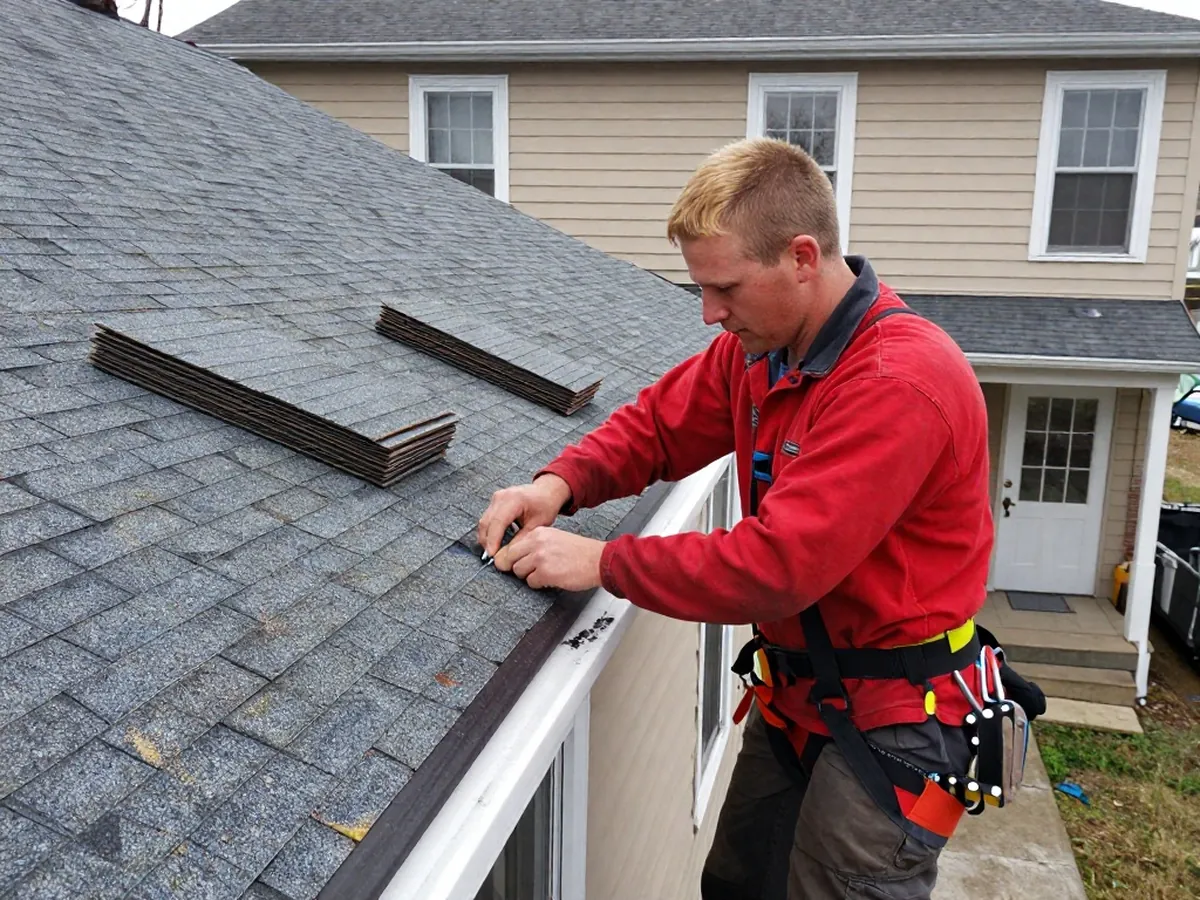
The first line on any estimate is what comes off. The roofing manufacturers' association notes that most codes stop at two layers of roof covering, and that a tear-off lets the deck be inspected. A roof that already carries two layers has had part of its answer decided.
Ask the roofer how many layers are on yours, and what each choice leaves hidden.
Six lines and the question behind each
| Line | What moves it | Ask this |
|---|---|---|
| Tear-off | The number of layers on the roof | How many layers are up there, and who removes them? |
| Deck | Rot, warping or gaps found once the shingles are off | What changes if boards need replacing, and where is it written? |
| Flashing | Chimney, wall and vent joints | Which pieces are replaced and which are reused? |
| Fasteners and sealing | Nails, and hand-sealing at hips and ridges | Are roofing nails used, not staples? |
| Permits and fees | Whether the job needs one, and who files | Is the permit fee in the quote or left out? |
| Subcontractors | Who does which part of the work | Whose name is on each part? |
The deck: the line nobody can price until it is open
Under the shingles sits the roof deck. The same association names rotted or warped wood and gaps wider than a quarter inch as signs of trouble. The Department of Energy's brief says damage in one spot is repaired with panels of the same thickness, that wet insulation has to come out, and that the wood's moisture reading has to be under 20 percent before new material goes over it.
A clear estimate says what happens if the deck turns out worse than it looks: who finds out, and how the change gets written down.
Flashing, vents and the small metal
Metal takes up little room on a quote and a lot of room in a leak. IIBEC calls surface-mounted counterflashing on a brick chimney the most common defect in its article, and says water can migrate behind it toward the deck and the framing. FEMA's shingle fact sheet adds hand-sealing at hips and ridges.
Ask which flashings are being replaced, which are being reused, and how the counterflashing is attached.
Fasteners, and why a quote names them
FEMA's fact sheet calls for roofing nails in place of staples and for sealed shingle tabs. It takes a single line on a quote. A line that reads shingles installed says little. A line that names the principal materials and the fasteners says a lot more, and New Jersey's contract rule asks for the principal materials anyway.
What the written contract has to hold
New Jersey's contract rule for home improvement work, Administrative Code section 13:45A-16.2, requires a written contract, signed by everyone involved, on jobs above $500. It names the seller and address, describes the work and principal materials, states the total price including finance charges, and gives start and completion dates. Changes after signing are written down and signed too.
The rule also has the seller disclose price exclusions, permit fees among them, and the name of any subcontractor. Exclusions are the lines to read slowly.
Permits, inspections and the last payment
That rule also keeps a seller from starting before the permits the job needs are issued, and it puts inspection certificates in the buyer's hands before final payment. Whether a permit is needed is a separate question. For a detached house holding one or two households, repairing or replacing the existing roof covering sits on the state's ordinary-maintenance list, which asks for no permit, notice or inspection. The attorney general's tip sheet cautions against large up-front payments.
The Division of Consumer Affairs runs a lookup for registered home improvement contractors, and its FAQ says the registration number belongs on ads and documents. The Ahead of the quote list has the details.
Ready to ask about an estimate?
A look at the roof comes first, whether the question is a full replacement or an inspection to find out how the roof is doing.
To go further, call (973) 791-8220 with the street address and, if you know it, how old the roof is, plus the lines above in front of you.