Step 1: the first hour belongs to wires and ceilings
PSE&G's word on a downed wire is to assume it carries current, report it to 911 or to the utility on 1-800-436-7734, and stay away from any tree tangled in the lines. A ceiling that bows or sags could be holding water, and Pennsylvania's environmental agency says wet drywall turns fragile enough to fall when bumped. Keep the room below empty and dial 911.
The roof is not part of the first hour.
The eight steps, in order
Look at the wires before the roof; down means 911 or PSE&G.
Keep out from under a bulging or sagging ceiling and call 911.
Photograph everything with dates before any cleanup.
Call the insurer and keep the claim number.
Leave temporary cover to a roofer, and save every receipt.
Check any contractor in the state lookup before signing.
Read the written contract: names, work, materials, price, dates, changes.
Ask who handles permits and inspections, and keep the certificates.
Step 2: pictures before cleanup
Dated photos of the lawn, each side of the roof and each stained ceiling start the record. The state insurance department asks for pictures before anything damaged is thrown out, and for the damaged property itself to be kept in case the insurer wants to see it.
Call the insurer promptly. A claim number is the thread that ties the later steps together.
Step 3: temporary cover, kept short
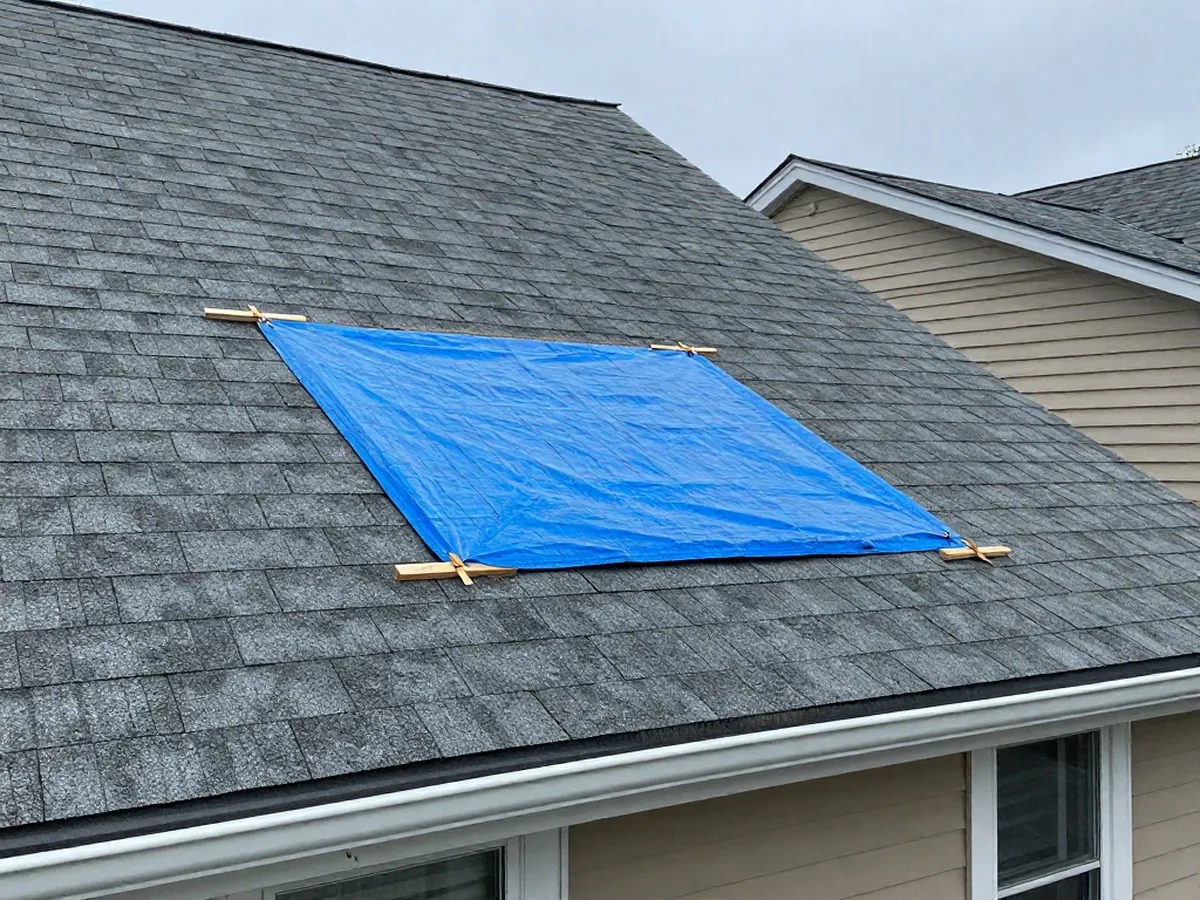
The same department says to make temporary repairs that keep the loss from growing, and to save the receipts. On a roof, that is a roofer's tarp, not a homeowner climbing up a wet slope in the dark.
The attorney general's tip sheet advises caution about unsolicited offers and about anyone who wants a large payment up front.
Step 4: the knock at the door
Knocks on the door tend to follow a storm. The Division of Consumer Affairs expects home improvement contractors to register each year, to put the registration number on ads and paperwork, and to turn up in its online lookup.
A cooling-off rule from the FTC gives a buyer three business days to back out of some sales made at the buyer's home or anywhere but the seller's permanent place of business. Exceptions include emergencies and repairs the buyer asked the seller to come and make. Read the FTC's page before counting on it.
Step 5: the contract, line by line
On work above $500, the contract is written and signed by all parties, per Administrative Code section 13:45A-16.2. Look for the seller's name and address, a description of the work and main materials, the total price, start and completion dates, and a way to write down changes.
The seller also has to disclose price exclusions and the name of any subcontractor. Read those lines last and slowest.
Step 6: permits, inspections and the final check
The rule bars the seller from starting until the job's permits are issued, and the buyer gets inspection certificates before the final payment. For a detached house holding one or two households, repairing or replacing existing roof covering sits on the state's ordinary-maintenance list, so the permit answer for that kind of job can be none.
A 2023 law, amended in January 2026, sets up a state board that can issue limited specialty licenses, roofing among them. Its license requirement waits on the board's rules, and the Division is the place to ask what applies now.
Where do you start?
Start at step one, and stop wherever the list ends. The roof itself is covered under storm damage repair, and a first look at the damage is a roof inspection.
Once the wires and ceilings are safe, call (973) 791-8220 and say which step you are on.